Why You Shouldn't Ask a 10-Year-Old What They Want to Be
It's the most natural question in the world. A relative leans across the table, smiles, and asks your child, "So — what do you want to be when you grow up?" It feels harmless. But there's a good chance your child already can't answer it honestly — and the reason is more interesting than shyness.
What the research actually found
In 1981, career psychologist Linda Gottfredson published a theory that's shaped the field ever since: circumscription and compromise. Her finding was that children don't choose careers so much as quietly eliminate them — long before anyone asks — and they do it in stages.
By ages 6–8, kids rule out jobs that feel wrong for their gender. By 9–13, they rule out jobs that feel wrong for their family's social level — too fancy, or not fancy enough. Only in their mid-teens do they start weighing their own interests and abilities. So when you ask a 10-year-old, the answer you get has already been filtered through what feels "allowed" — not what actually fits them.
Which is why the answers sound so small
"YouTuber." "Doctor." "I don't know." These aren't your child's real interests failing to show up. They're the few options that survived a filter your child doesn't even know they're running. Push harder and you don't get truth — you get performance: the answer they think will please the grown-up asking.
Stop asking. Start watching.
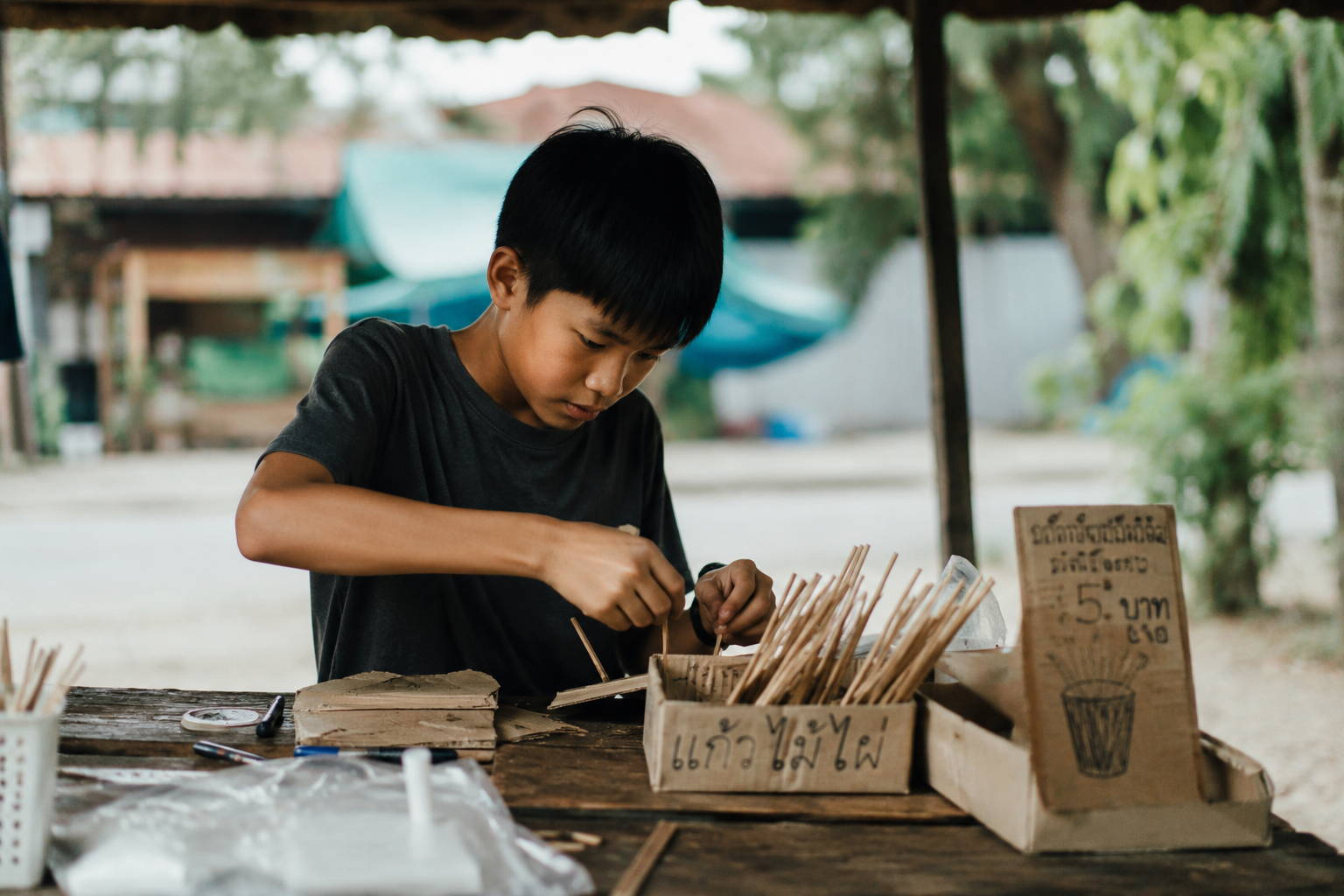
A child's genuine interests don't live in what they say — they live in what they do when no one's grading it. Which child organizes everyone else? Which one quietly fixes the thing that broke? Who keeps drawing, who keeps asking why, who loses all track of time building something? That behavior is the real answer, and it's visible years before a child can put it into words.
How we do it at KidBiz
We never sit a child down and ask what they want to be. Instead, over two days we move them through six kinds of hands-on challenge — making, leading, solving, helping, organizing, persuading — and we watch. We note where they light up and where time disappears. The result isn't a career label; it's a First Read of how your child naturally works, based on what they did, not what they claimed. That's a far more honest place for a young person to start.
The best question isn't "what do you want to be?" It's "what does your child already do when nobody's asking?"
ทำไมไม่ควรถามเด็ก 10 ขวบว่าโตขึ้นอยากเป็นอะไร
มันเป็นคำถามที่เป็นธรรมชาติที่สุดในโลก ญาติโน้มตัวข้ามโต๊ะ ยิ้ม แล้วถามลูกว่า "โตขึ้นหนูอยากเป็นอะไรจ๊ะ?" ฟังดูไม่มีพิษภัย แต่มีโอกาสสูงมากที่ลูกจะตอบตามจริงไม่ได้ — และเหตุผลน่าสนใจกว่าแค่ความเขินอาย
งานวิจัยพบอะไรจริง ๆ
ปี 1981 นักจิตวิทยาด้านอาชีพ Linda Gottfredson ตีพิมพ์ทฤษฎีที่กำหนดทิศทางของวงการมาจนถึงวันนี้: circumscription and compromise ข้อค้นพบของเธอคือ เด็กไม่ได้ "เลือก" อาชีพเท่ากับ "ตัด" อาชีพทิ้งเงียบ ๆ — นานก่อนที่ใครจะถาม — และตัดเป็นขั้น ๆ
ช่วง 6–8 ขวบ เด็กตัดอาชีพที่รู้สึกว่า "ไม่ใช่เพศตัวเอง" ออก ช่วง 9–13 ตัดอาชีพที่รู้สึกว่าไม่เข้ากับระดับสังคมของครอบครัว — หรูไป หรือไม่หรูพอ กว่าจะเริ่มชั่งน้ำหนักจาก ความสนใจของตัวเอง จริง ๆ ก็ปาเข้าวัยรุ่นตอนกลาง ฉะนั้นเวลาคุณถามเด็ก 10 ขวบ คำตอบที่ได้ถูกกรองผ่าน "สิ่งที่รู้สึกว่าได้รับอนุญาต" ไปแล้ว ไม่ใช่สิ่งที่เหมาะกับเขาจริง
เพราะงี้คำตอบถึงฟังดูเล็กนิดเดียว
"ยูทูปเบอร์" "หมอ" "ไม่รู้" — พวกนี้ไม่ใช่ความสนใจจริงของลูกที่ไม่ยอมโผล่ออกมา แต่มันคือไม่กี่ตัวเลือกที่รอดจากตัวกรองที่ลูกเองก็ไม่รู้ตัวว่ากำลังใช้อยู่ ยิ่งคาดคั้น ยิ่งไม่ได้ความจริง — ได้แค่การแสดง: คำตอบที่เขาคิดว่าจะทำให้ผู้ใหญ่ที่ถามพอใจ
เลิกถาม แล้วเริ่มสังเกต
ความสนใจแท้ของเด็กไม่ได้อยู่ในสิ่งที่เขา พูด — มันอยู่ในสิ่งที่เขา ทำ ตอนไม่มีใครให้คะแนน เด็กคนไหนคอยจัดระเบียบให้คนอื่น คนไหนเงียบ ๆ ซ่อมของที่พัง ใครวาดไม่หยุด ใครถามว่าทำไมไม่เลิก ใครลืมเวลาไปเลยตอนสร้างอะไรบางอย่าง พฤติกรรมนั่นแหละคือคำตอบจริง และมันมองเห็นได้หลายปีก่อนที่เด็กจะพูดออกมาเป็นคำ ๆ
ที่ KidBiz เราทำยังไง
เราไม่เคยจับเด็กมานั่งถามว่าโตขึ้นอยากเป็นอะไร แต่ตลอด 2 วัน เราพาเขาผ่านโจทย์ลงมือทำ 6 แบบ — สร้าง นำ แก้ปัญหา ช่วยเหลือ จัดระเบียบ โน้มน้าว — แล้วเราสังเกต จดว่าเขาตาลุกวาวตรงไหน และเวลาหายไปตรงไหน ผลลัพธ์ไม่ใช่ป้ายอาชีพ แต่คือ First Read ว่าลูกทำงานแบบไหนโดยธรรมชาติ จากสิ่งที่เขาทำ ไม่ใช่สิ่งที่เขาอ้าง นั่นคือจุดเริ่มที่ซื่อตรงกว่ามากสำหรับเด็กคนหนึ่ง
คำถามที่ดีที่สุดไม่ใช่ "โตขึ้นอยากเป็นอะไร" แต่คือ "ลูกทำอะไรอยู่แล้วตอนไม่มีใครถาม"